
Sourdough is more than a bread recipe. It is a controlled biological fermentation in which yeasts, lactic acid bacteria, flour enzymes and a developing gluten network work together to create flavour, volume and texture.
Understanding how these processes interact helps bakers move beyond fixed timings and learn to interpret dough behaviour under changing conditions.
The microbiology of sourdough fermentation
A mature sourdough culture contains yeasts and lactic acid bacteria. Yeasts produce carbon dioxide that contributes to dough rise. Lactic acid bacteria produce organic acids and flavour compounds that help give sourdough its characteristic aroma and acidity.
Temperature, hydration, flour composition and refreshment schedules influence the microbial balance. Lactic acid is generally associated with a milder acidity, while acetic acid is sharper; their proportions depend on multiple fermentation conditions.
A starter is a living ecosystem, not a single yeast strain. Different starters may behave differently under the same feeding schedule.
How a sourdough starter works
A starter is maintained by refreshing part of an established culture with flour and water. Reliable rise after feeding, characteristic aroma and predictable fermentation behaviour are more useful indicators of readiness than any single float test.
Example: 1:2:2 feeding ratio
Wholegrain and rye flours can provide additional nutrients for microbial activity. Refrigeration slows fermentation, while warmer conditions generally accelerate it. Discard a starter if visible mould develops.
Baker's percentages and true dough hydration
Baker's percentage expresses ingredients relative to total flour weight. Flour is always 100%. When a starter is added, both its flour and water must be included in the hydration calculation.
| Ingredient | Amount |
|---|---|
| Bread flour | 900 g |
| Water | 650 g |
| 100% hydration starter | 200 g |
| Salt | 20 g |
Higher hydration may encourage an open crumb, but it also demands suitable flour strength, fermentation management and dough handling. Hydration alone does not determine crumb openness.
Gluten development: strength and extensibility
Glutenin and gliadin contribute elasticity and extensibility to wheat dough. Together, the hydrated gluten network helps retain gases produced during fermentation.
Autolyse, stretch-and-fold and coil folds
Autolyse allows flour and water to hydrate before final mixing. Stretch-and-fold and coil-fold techniques help develop dough strength during bulk fermentation while avoiding continuous intensive mixing.
Bulk fermentation: follow the dough, not the clock
During bulk fermentation, microorganisms generate gas and acids while dough structure continues to change. Temperature strongly influences fermentation speed. Many wheat sourdough formulas are managed around 24–27°C.
Observe dough expansion, gas formation, surface smoothness and elasticity. Excessive fermentation can weaken structure, while insufficient fermentation often leads to a dense loaf.
Shaping, proofing and cold retardation
Pre-shaping organizes the dough and the bench rest allows gluten to relax. Final shaping creates surface tension that supports loaf expansion. Cold retardation slows fermentation and makes scheduling more flexible.
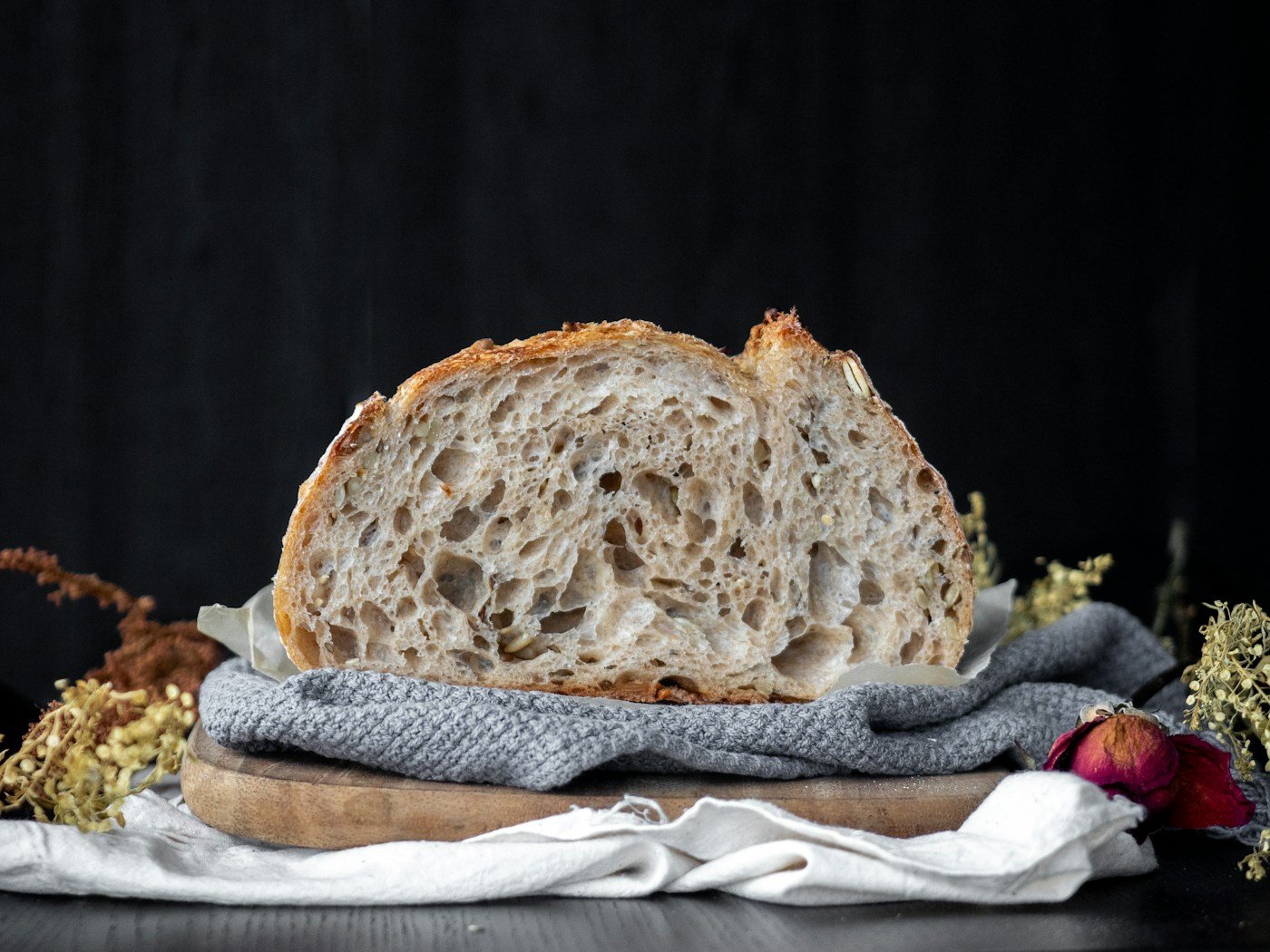
The final crumb reflects fermentation, gluten strength, shaping and baking.
Common sourdough defects and their causes
| Defect | Possible causes |
|---|---|
| Dense crumb | Under-fermentation, weak starter, insufficient gluten development |
| Flat loaf | Over-fermentation, weak dough, insufficient shaping tension |
| Gummy crumb | Underbaking, slicing too soon, fermentation imbalance |
| Poor oven spring | Proofing imbalance, inadequate heat, poor shaping |
| Excessive sourness | Starter maintenance and fermentation conditions |
Sourdough, Poolish, Biga and old dough
Sourdough starter is a maintained culture of wild yeasts and lactic acid bacteria. Poolish is typically a liquid preferment made with commercial yeast. Biga is a firmer preferment often associated with Italian baking. Pâte fermentée is previously fermented dough incorporated into a fresh batch.
Storage, cooling and shelf life
Cool bread adequately before slicing or packaging. Packaging warm bread may cause condensation and increase spoilage risk. Bread staling is partly associated with starch retrogradation.
Consistent sourdough comes from understanding the relationship between starter activity, hydration, dough temperature, gluten development, fermentation and heat—not from following a fixed clock.
